Everything You Need to Know About This Famous Dairy Breed
Introduction
Holstein-Friesian cattle are among the most famous and important cattle breeds in the world, renowned for their high milk production and high-quality milk. Originating in the northern regions of the Netherlands and Germany, specifically the Friesland region of the Netherlands and Schleswig-Holstein in Germany, this breed has since spread throughout the world, becoming the backbone of the dairy industry in many countries, particularly the United States, Canada, Australia, and New Zealand.
Origin and History
The Holstein-Friesian breed has evolved over hundreds of years through selective breeding of local Dutch cattle with those from northern Germany. Farmers in these regions focused on improving the genetic traits of their cattle, primarily for milk production, while also prioritizing robust health, endurance, and a strong immune system. The Holstein-Friesian breed first gained popularity in Europe and was then introduced to the United States in the mid-19th century, where it flourished and became the most widespread breed on large dairy farms.
Physical Characteristics
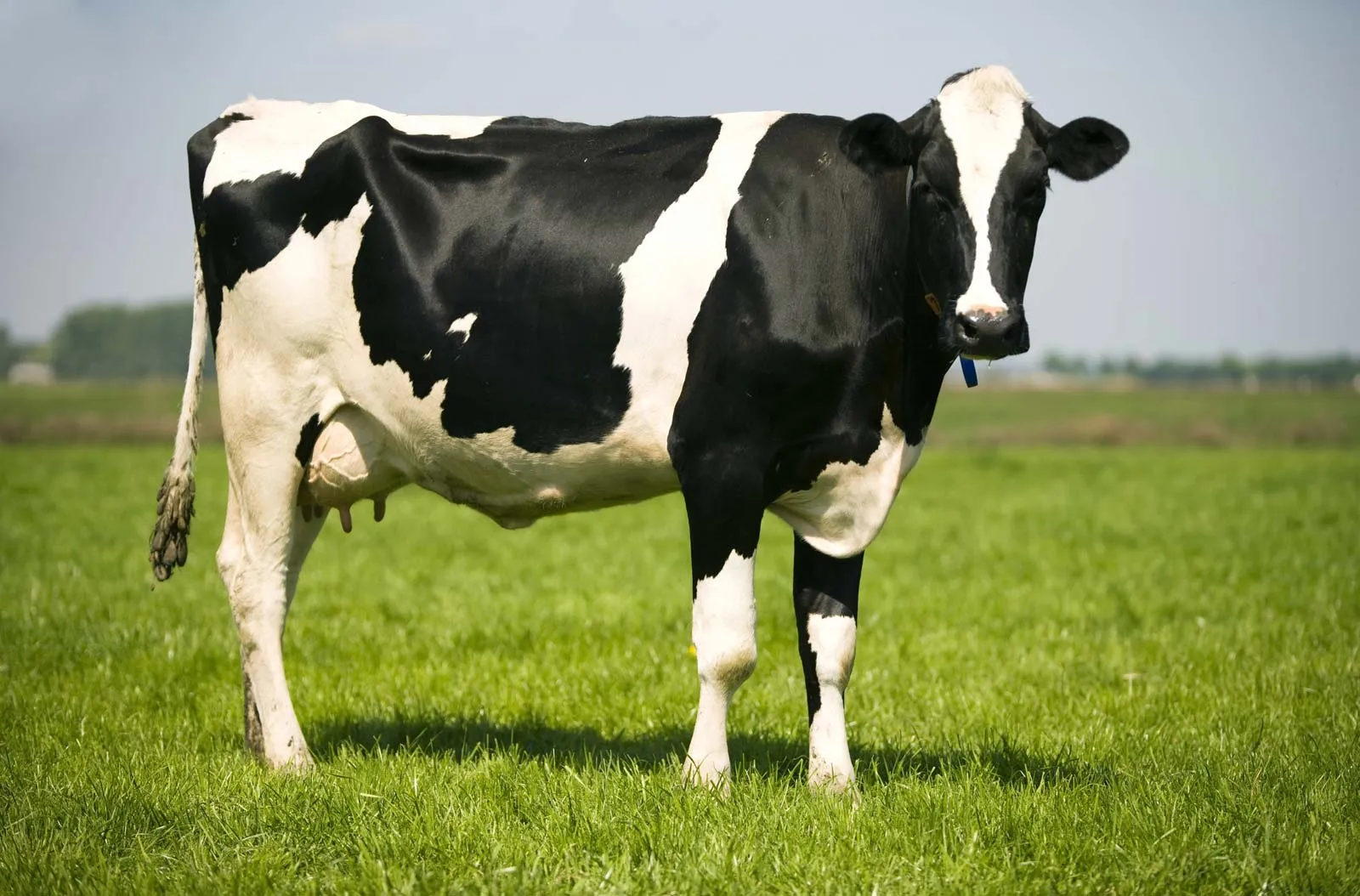
• Size and Body Structure: Holstein-Friesians are large and well-proportioned. Adult cows average between 600 and 700 kg, while adult bulls weigh between 1000 and 1200 kg.
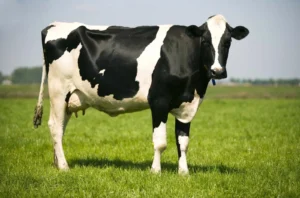
• Color: The breed is most famous for its black and white mottled coat, although some individuals are reddish-white with red spots.
• Head and Horns: The head is relatively long, with a broad forehead and a large nose. The cows have small horns, which are often trimmed on modern farms.
• Legs and Skeleton: The cows have strong, straight legs and a robust skeleton that supports their large body weight. Production Characteristics
• Milk Production: Holstein-Friesian is the world’s leading milk-producing breed. A single cow can produce between 7,500 and 12,000 liters annually, and some cows can produce more than 15,000 liters annually under ideal conditions.
• Milk Quality: Holstein-Friesian milk has a fat content between 3.2% and 3.8%, and a protein content between 3.0% and 3.5%. This makes it suitable for dairy products such as cheese, butter, and yogurt.
• Feed Conversion Efficiency: These cows have a high capacity for consuming and efficiently converting feed into milk, which reduces production costs and increases profits.
Reproductive and Health Characteristics
• Fertility: Average to good. However, due to high production, females may face some fertility challenges, requiring special attention to nutrition and reproductive health programs.
• Fertility • Gestation period: Approximately 280 days (9 months), usually resulting in a single calf, with twins being rare.
• General health: This breed is susceptible to certain high-production-related diseases, such as mastitis and metabolic problems (like ketoacidosis and calcium deficiency), so continuous health monitoring is essential.
• Productive lifespan: The average productive lifespan is 5 to 7 years on intensive farms, and may be longer under traditional conditions.
Advantages and disadvantages
Advantages
• Highest milk production among all breeds.
• Easily adaptable to modern rearing systems and industrial farms.
• Availability of genetically improved strains, facilitating genetic improvement programs.
Disadvantages
• High requirement for good, balanced nutrition due to high milk production.
• Susceptible to health problems associated with intensive production.
• Shorter average productive lifespan compared to some other breeds. Environment and Breeding
Holstein-Friesian cows prefer temperate climates and areas with good pasture, but they can adapt to diverse environmental conditions with proper nutrition and care. Cows require well-ventilated and clean housing, and clean drinking water must be provided under constant health monitoring.
Feeding
This breed consumes large quantities of concentrated and roughage feed (such as alfalfa, silage, and grains). Their diets must contain an ideal balance of energy, protein, minerals, and vitamins to ensure high productivity and good health.
Care and Management
Raising Holstein-Friesian cows requires efficient management and daily care, including regular milking, cleaning, health monitoring, and the administration of periodic treatments and vaccinations. Monitoring production and recording data for each cow is also recommended to improve performance and prevent genetic or health problems. Other Uses
In addition to milk production, males of this breed can be used for meat production. However, the meat quality is lower compared to specialized fattening breeds. Holstein-Friesians are also used in crossbreeding programs to improve milk production in local breeds.
Breed Distribution and Major Producing Countries
The Holstein-Friesian breed is found in more than 100 countries worldwide, with the United States, Canada, the Netherlands, Germany, New Zealand, and Australia being among the largest producers. The Holstein-Friesian is the most well-documented breed in terms of pedigree and production records, which facilitates monitoring genetic improvement and developing breeding programs.
Conclusion
Holstein-Friesian cows represent an ideal choice for ambitious dairy farmers seeking high productivity and efficient feed-to-milk conversion. However, this breed requires meticulous care and constant attention to ensure sustainable production and herd health. A thorough understanding of the breed’s characteristics and the appropriate measures taken in breeding, feeding, and management are the best ways to maximize its potential and achieve optimal results in the dairy industry.